What is Last Mile Delivery? The Last Mile Problem in E-commerce.


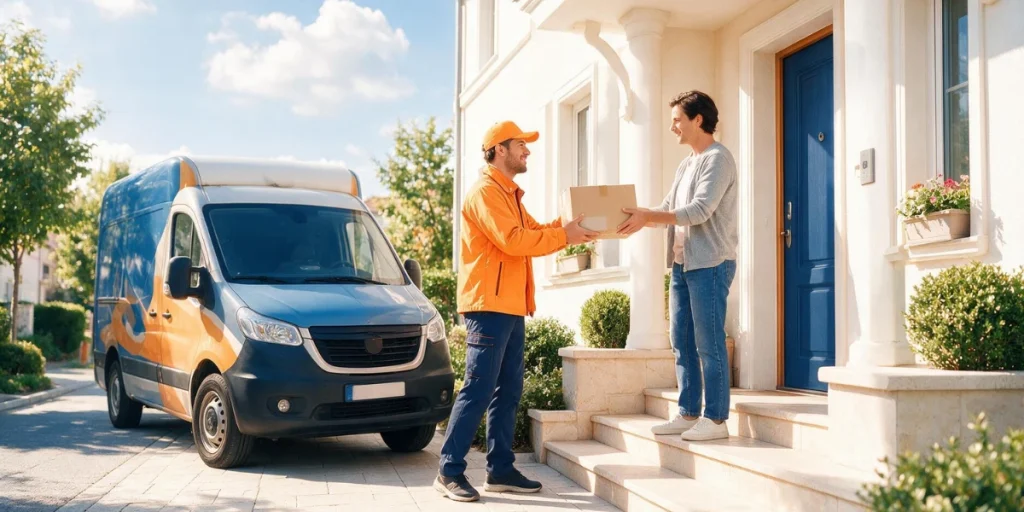
With the growth of e-commerce, logistics processes are no longer limited to simply removing products from the warehouse; the real competition begins with how and how quickly the product reaches the customer. The most critical stage of this process is last-mile delivery. Last-mile delivery refers to the final delivery process from the moment the product leaves the distribution center until it reaches the customer's doorstep. Although it is called the “last mile,” it is actually the most complex, costly, and problematic part of logistics operations. This is because this stage requires the simultaneous management of many variables such as city traffic, address accuracy, customer availability, delivery time pressure, and courier performance.
What is Last Mile Delivery?
Last-mile delivery refers to the entire process from the moment an order leaves a warehouse or distribution center until it reaches the customer's doorstep. This process, one of the most critical and challenging stages of e-commerce operations, is the final point of contact that directly impacts the customer experience. No matter how quickly a product is prepared or how accurately it is packaged, delays, damage, or lack of communication during delivery can negatively affect the entire experience. The process typically involves loading products onto delivery vehicles at the distribution center, distributing them along specific routes, and delivering them to the customer as quickly as possible. However, factors such as city traffic, address errors, inability to locate the customer, high order volumes, and disruptions in delivery planning complicate the last-mile delivery process. Especially in large cities, this process can be the most expensive stage of the operation in terms of both time and cost. Therefore, companies strive to make this process more efficient with solutions such as route optimization, micro-distribution centers, smart delivery scheduling systems, and alternative delivery points.
How does Last Mile Delivery work?
Last-mile delivery typically begins when products leave the main warehouse and arrive at local distribution centers. Here, orders are sorted by delivery zone and courier scheduling is carried out. Orders are then delivered to customers along designated routes. Each stage of the process directly impacts the speed and accuracy of the operation. Route optimization and courier management, in particular, play a crucial role in last-mile performance.
The basic stages of this process are as follows:
- The products leave the main warehouse and arrive at the regional distribution center.
- Order segregation based on location.
- Planning delivery routes
- Courier assignment and loading processes
- Customer delivery and delivery confirmation.
Why is Last Mile Delivery So Critical?
In e-commerce, the most important moment for the customer is the moment the order arrives at their door. Therefore... final mile delivery, Customer satisfaction has become a crucial factor. No matter how high the quality of the product, late or damaged delivery negatively impacts the customer experience.
The main reasons why the final mile is critical are as follows:
- It is the only physical stage where there is direct contact with the customer.
- Delivery speed influences purchasing decisions.
- Delivering goods without damage increases brand trust.
- Communication during the delivery process shapes customer perception.
What is the Last Mile Problem in Logistics?
Logistics last mile problem, This is considered one of the most challenging and costly processes in e-commerce operations. This problem refers to the operational difficulties encountered during the process of delivering products to the end user.
The main problems are as follows:
- The delivery points are numerous and scattered.
- City traffic and time loss
- Address errors or missing information
- The customer is not at the address at the time of delivery.
- High delivery costs
What are the problems with last-mile delivery?
Last-mile delivery problems are a common occurrence in e-commerce operations. These problems can directly affect both logistics processes and customer satisfaction.
Last-mile delivery problems can be listed as follows:
- Delivery delays and orders that do not arrive on time
- Delivery to an incorrect or incomplete address.
- Damaged product delivery
- Errors caused by the courier.
- Lack of communication with the customer
- Customer not found during delivery
Last-mile delivery is the most expensive stage of the logistics chain. This is mainly because deliveries are made to individual addresses, eliminating the advantage of bulk distribution.
The factors that increase costs can be listed as follows:
- Low delivery volume (delivery to individual addresses)
- Fuel and vehicle costs
- Courier labor costs
- Wasted time and route inefficiency
- Return and redelivery processes
How to Optimize Last Mile Delivery?
Technology and strategic planning should be used together to make the last-mile process more efficient. Optimizing this process provides a competitive advantage, especially in growing e-commerce operations.
Methods that can be applied for optimization:
- Using intelligent route planning systems
- Establishing regional micro-distribution centers
- Optimizing delivery timeframes
- Offering alternative delivery points (locker, store pickup)
- To provide real-time tracking and customer information.
- Regularly analyze courier performance.
These solutions both reduce costs and improve delivery performance.
Last-mile delivery is a constantly evolving field driven by technological advancements. In the future, this process is expected to become faster, smarter, and more sustainable.
- Delivery by drones and autonomous vehicles.
- Increased use of electric vehicles
- AI-powered route optimization.
- Same-day and same-hour delivery options
- Micro storage (dark store) systems
These innovations will make it easier to meet customer expectations while reducing the last-mile problem. Success in e-commerce is not only about offering the right product, but also about delivering that product to the customer at the right time and in the right way. Optimizing last-mile delivery not only reduces costs but also supports sustainable growth by increasing customer satisfaction. If you want to take your e-commerce operations to the next level and make your delivery processes more efficient, you can strengthen your last-mile delivery strategy and build a robust logistics infrastructure.




Related Content

How to Reduce Order Delays in E-commerce?
One of the most important factors shaping customer experience in e-commerce is the accurate and timely preparation and delivery of orders. For a customer, the purchase…
How to Track Inventory Across Your Website and Marketplaces?
As e-commerce brands grow, they begin to diversify their sales channels. Selling on different marketplaces in addition to their own e-commerce site allows them to reach a wider audience…

What is the conversion rate in e-commerce?
Jewelry and accessories stand out as one of the most delicate product groups in e-commerce. Due to their small size, they are at high risk of being lost.