What are the differences between B2B and B2C?


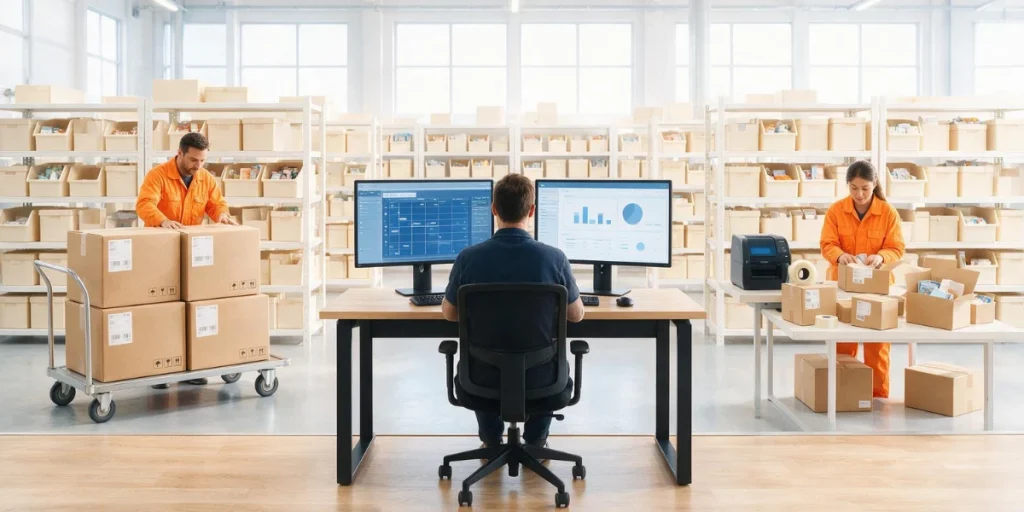
Digital commerce models are based on target audience and sales strategies. B2B (Business to Business) and B2C It is divided into two main categories: Business to Consumer. Although both models hold an important place in the e-commerce world, they are quite different in terms of structure, goals, processes, and expectations.
What is B2B?
What is B2B? The answer to the question “What is a business-to-business (B2B) model?” can be given as the general name for commercial activities that take place between businesses. This includes parties such as manufacturers, wholesalers, or distributors selling products or services to other companies. The B2B model is preferred, especially when it comes to the sale of raw materials, semi-finished products, or corporate services. B2B abbreviation In English, it stands for Business to Business, and it forms the backbone of supply chains and commercial processes.
B2B systems are widely used in the following areas:
- Enterprise software and services: Solutions such as ERP and CRM.
- Bulk product sales: Raw materials, packaging, industrial products.
- Distributor relationships: Regional distributors of brands
- Wholesale platforms: Platform B2B Examples that stand out include Alibaba or ThomasNet.
The term used in this field is “What is a B2B business model?” The question is answered by stating that these are corporate business structures that involve long-term relationships, high-volume orders, and personalized pricing processes. Furthermore... What is B2B marketing? This refers to sales strategies that are content-focused, provide technical information, and concentrate on one-on-one communication.
What is B2C?
This model represents the dimension of trade that reaches the consumer directly. B2C’dir. It is an abbreviation of “Business to Consumer”. B2C abbreviation, This includes businesses that offer products or services directly to the end consumer. All channels that reach consumers, such as e-commerce sites, chain stores, or mobile applications, are considered within this model.
What is B2C? The question can be explained as follows: It is a sales method aimed at a high-volume customer base, where products reach the end user through individual sales. Selling directly to customers. It is also referred to as [specific method]. Within this structure, reaching the user through methods such as SEO, digital advertising, and social media marketing is paramount.
What is B2C sales? The answer to this question generally includes the following:
- Individual shopping on e-commerce platforms
- Orders placed through mobile applications
- Online sales in sectors such as groceries, clothing, and electronics.
- Services offered to individual users through subscription systems.
Many successful brands, What is B2C? Examples. This can be shown as follows: Retail-focused e-commerce giants like Amazon, Trendyol, and Hepsiburada operate within a typical B2C structure.
What is the difference between B2B and B2C?
What are B2B and B2C? Following these questions, the most important point is to correctly analyze the differences between these two models. Because both structures have significant differences in terms of both the sales process and the marketing language. In particular... What is the difference between B2B and B2C? This question serves as a guide for businesses when developing a digital strategy.
Below The difference between B2B and B2C. It is summarized as follows:
| Criterion | B2B | B2C |
| Target group | Companies | Individual Consumers |
| Sales Volume | High Quantity, Wholesale | Low Quantity, Single Items |
| Decision-making Process | Long-term and multi-stakeholder | Fast and Individual |
| Marketing Language | Technical and Data-Driven | User-focused |
| Pricing | Variable, Negotiable | Fixed, List Price |
| Purchase Cycle | Offer, Invoice, Contract | Cart, Payment, Delivery |
| Loyalty | Contractual Commitment | Variable, Promotion-Focused |
These differences are also decisive in business model preferences and e-commerce software infrastructures. Business-to-business sales require details such as integration, custom API solutions, and reseller management; while in sales focused on individual customers, user experience and fast logistics are more important.
What are the advantages of B2C and B2B e-commerce?
Both models have their own unique advantages. Business-to-business e-commerce The processes offer a favorable environment for long-term trading and scalable orders, while selling to individual customers. B2C vs B2B These structures offer the potential for rapid growth and high brand awareness. The advantages of each model are discussed separately below:
B2B, Business-to-business (B2B) sales provide operational sustainability to businesses thanks to their higher volume, regular, and contractual trading structure. Although decision-making processes are lengthy in this model, loyalty rates are high. The advantages of B2B e-commerce can be listed as follows:
- Stable revenue with high order volume.
- Long-term customer relationships and loyalty
- Personalized pricing and promotional offers.
- Product and service integration (CRM and ERP systems)
- Business-to-business e-commerce examples with gaining sectoral expertise
B2C This model aims to reach a wide audience and offers the advantage of achieving high turnover in a short time with faster sales cycles. B2C systems, especially those supported by tools such as digital advertising, social media, and campaign management, have great potential in terms of brand awareness and customer experience. The advantages of B2C are as follows:
- A wider potential customer base.
- Instant feedback and market response.
- Opportunity for rapid growth through campaigns and advertising.
- High reach through social media and SEO.
- What is business-to-business e-commerce? simpler operational structure according to the question
Both models offer different advantages in the digital transformation process. The most appropriate approach is for entrepreneurs and brands to choose based on their goals, operational capabilities, and customer base.




Related Content

How to Reduce Order Delays in E-commerce?
One of the most important factors shaping customer experience in e-commerce is the accurate and timely preparation and delivery of orders. For a customer, the purchase…
How to Track Inventory Across Your Website and Marketplaces?
As e-commerce brands grow, they begin to diversify their sales channels. Selling on different marketplaces in addition to their own e-commerce site allows them to reach a wider audience…

What is the conversion rate in e-commerce?
Jewelry and accessories stand out as one of the most delicate product groups in e-commerce. Due to their small size, they are at high risk of being lost.