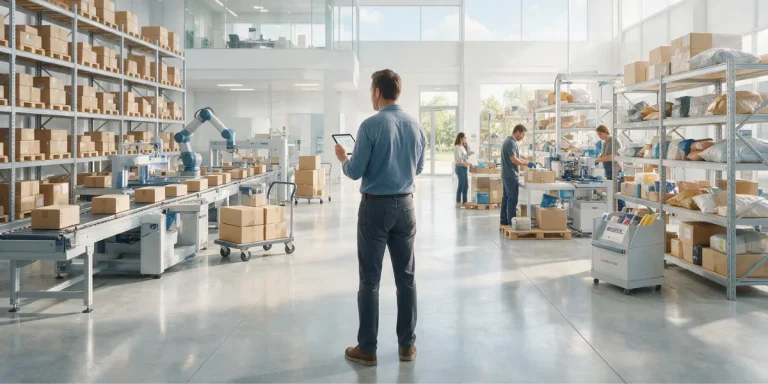
In the e-commerce world, one of the most critical aspects of customer experience is ensuring orders reach the customer quickly and smoothly. Fulfillment centers play a crucial role in this, handling warehousing, inventory tracking, order preparation, packaging, shipping, and returns processes on behalf of businesses. However, choosing the wrong fulfillment center can create new problems instead of advantages. Incorrect location, insufficient storage capacity, poor technological infrastructure, or operational insecurity directly impact customer satisfaction for e-commerce companies. Therefore, companies seeking fulfillment solutions need to pay attention to strategic criteria when selecting their business partners.
Location and Logistics Advantages
The first thing to consider when choosing a fulfillment center is its location. Selection of a central location for fulfillment, Location directly determines both shipping costs and delivery speed. For example, proximity to consumer hubs in major cities, main transportation routes, ports, and airports allows orders to be delivered much faster. Furthermore, fulfillment centers operating through regional warehouses offer the possibility of reaching customers in different cities or countries simultaneously at a lower cost. Location reduces not only shipping time but also the cost of return logistics, as products return to the center more quickly and can be resold.
The logistical advantages to consider are listed below:
- Proximity to major highways, ports, and airports.
- Easy access to areas with high e-commerce activity.
- Multi-point distribution capability (simultaneous delivery to different cities or countries)
- Reducing logistics costs in return processes.
- Same-day delivery available in high-demand areas.
Technological Infrastructure and Integration Competence
One of the most important factors determining the success of a fulfillment center is its technological infrastructure. Order tracking, inventory management, packaging processes, and shipping integrations should all be handled entirely through digital systems. This minimizes errors, allows for real-time tracking of orders, and simplifies reporting processes. This is especially important for e-commerce companies working with different marketplaces. Fulfillment software integration This is a critical point. The software used by the center must be compatible with platforms such as Trendyol, Hepsiburada, Amazon, and eBay, and orders must be automatically transferred to the Fulfillment center. Furthermore, seamless connectivity with the company's own software should be ensured through API or ERP integrations.
The following points should be considered in integration competency:
- Systems that can automatically transfer orders to marketplaces.
- Ability to update stock levels in real time.
- API/ERP integration support
- Automated billing and reporting infrastructure.
- Real-time tracking integration with shipping companies.
Storage Capacity and Operational Reliability
One of the most critical aspects of a fulfillment center is storage capacity and operational reliability. Insufficient warehouse capacity can lead to a lack of space for your products during peak sales periods (such as Black Friday, Christmas, or promotional campaigns), or delays in orders. Furthermore, the center's operational processes must be reliable. Correct product categorization, barcode-based inventory tracking, regular inventory reporting, and ensuring damage-free storage conditions are vital. The center should also offer 24/7 operational support and provide flexible solutions in emergency situations.
The operational aspects to consider are as follows:
- Large and scalable storage space.
- Barcoded inventory management and regular reporting.
- Modern infrastructure for product safety (fire, moisture, and theft prevention measures)
- Additional capacity support during campaign and peak periods
- Uninterrupted operational support and customer service.
Choose Valislogi as your reliable business partner for the right fulfillment solution.
In the e-commerce world, success is not limited to product quality or price advantage; efficient management of logistics processes is also one of the most critical factors determining competitiveness. The right fulfillment center provides businesses with both operational ease and cost advantages. Incorrect choices, however, can lead to disruptions in inventory management, delivery delays, and decreased customer satisfaction. Therefore, when choosing a fulfillment partner, criteria such as location, technological infrastructure, storage capacity, and operational reliability must be considered.
Furthermore, working with a partner that aligns with businesses' long-term goals allows them to develop scalable solutions. Managing increased order volumes, especially during campaign periods, is much easier with the right fulfillment partner. Companies that want to maintain customer satisfaction should collaborate with a center that can meet not only today's needs but also those of the future.
Fulfillment services are more than just logistical support; they are an integral part of a business's growth strategy. By choosing the right fulfillment center, e-commerce companies can relieve operational burdens, focus on sales and marketing, and establish a strong position in global markets. Selecting the right fulfillment partner plays a critical role in the operational success of e-commerce companies. Valislogi, a reliable and experienced partner, offers end-to-end logistics solutions to businesses. Thanks to Valislogi's extensive warehouse network, modern technological infrastructure, and robust integration systems, companies can manage their logistics processes seamlessly. Especially for businesses working with different marketplaces, the software integrations offered enable the rapid transfer and automated processing of orders. Furthermore, Valislogi's operational reliability covers the entire process, from secure product storage to accurate shipping. This customer-focused approach not only lightens the logistical burden for businesses but also helps them increase sales and expand into global markets.